
I Need Some Branding – What Are My Options?
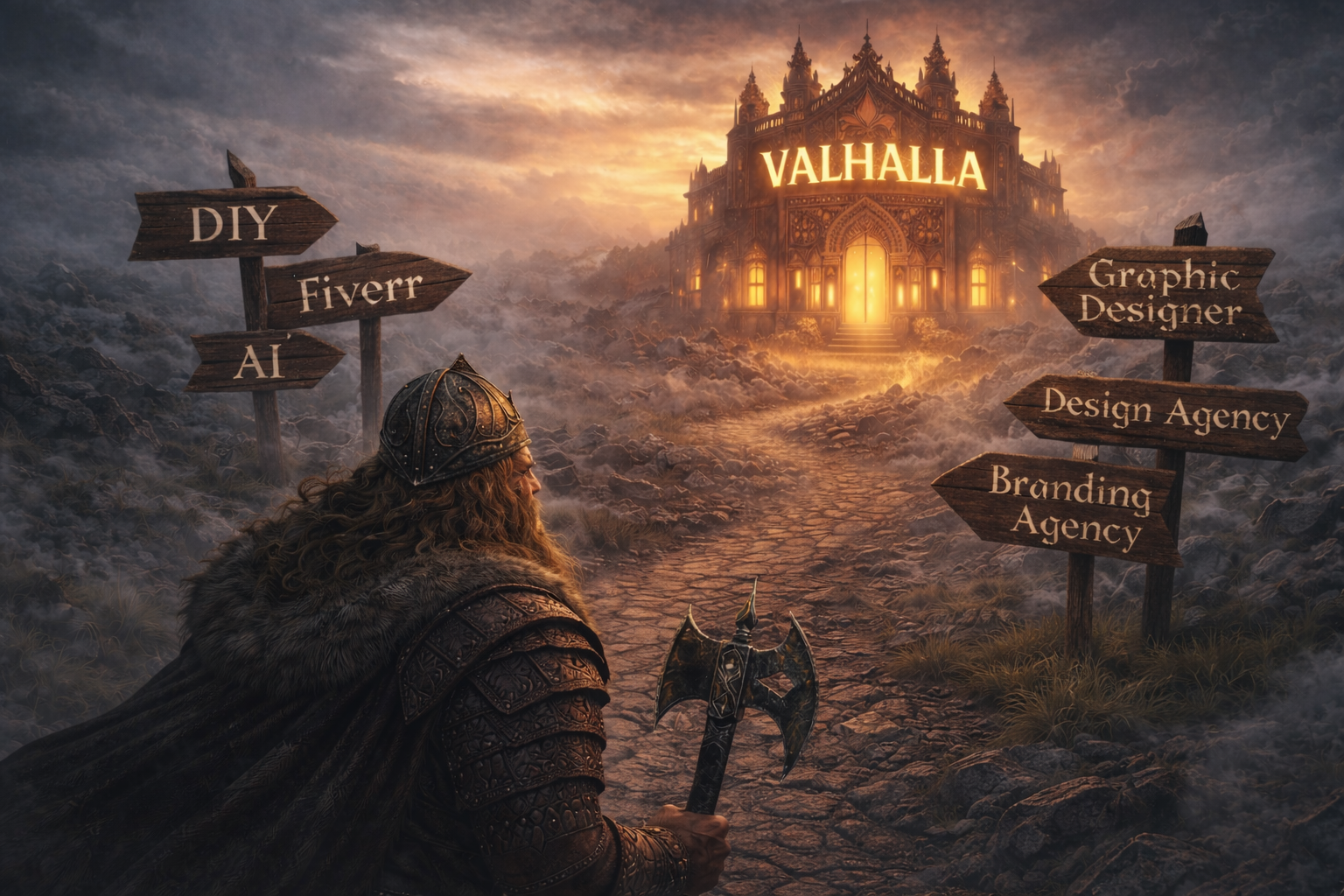
If you’ve found yourself thinking, “I need some branding for my business, but where do I start?”, you’re not alone. Branding can feel like a shot into the dark. Especially if your business is just getting started. The good news is, there are multiple paths you can take, depending on your stage, budget, and ambitions.
Here’s a look at the main options, what you can realistically expect from each.
1. DIY Branding
Many businesses begin by creating their own branding. You might have design skills yourself, or perhaps a creative friend is willing to help. In the early days, when budgets are tight and momentum matters most, this can be a perfectly sensible decision.
DIY branding allows you to test ideas and get your business into the world quickly. It often serves as a stepping stone rather than a long-term solution.
Best For:
Very early-stage startups
Testing a concept before investing heavily
Founders with confidence in design tools
Possible Downside:
Often focuses on aesthetics rather than strategy
Can limit flexibility as the business grows
May require a full rework later
Think of it as a prototype. Functional, but rarely final.
2. Fiverr or Online Marketplaces
Online platforms such as Fiverr make branding accessible and affordable. You can commission a logo quickly, often at a low cost, with relatively fast turnaround times.
If you have a clear idea of what you want and need something simple executed well, this route can work.
However, branding is more than a logo. It includes positioning, tone of voice, visual systems, and long-term consistency. Marketplace projects typically focus on deliverables rather than strategic depth.
Best For:
Tight budgets
Quick logo creation
Clear, straightforward briefs
Possible Downside:
Limited strategic guidance
Designs may feel generic or trend-driven
Additional revisions or assets can increase costs
This option can be an efficient starting point, but it rarely provides the full picture.
3. Website Designers or Other Specialists
Some web designers, marketing consultants, or print specialists offer branding as an additional service. This can be convenient if you’re already commissioning related work.
The branding outcome is often shaped by the primary service. For example, a website-led project may build the visual identity around layout and usability first.
Best For:
Businesses already investing in a website
Projects prioritising speed and cohesion
Situations where branding isn’t the core focus
Possible Downside:
Branding may lack deeper strategic exploration
Visual identity may be shaped by platform constraints
Long-term brand positioning may remain undefined
This route works well when branding supports another primary objective.
4. Generalist Graphic Designers
Graphic designers specialise in visual communication; typography, layout, colour systems, and visual consistency. A strong designer can create a polished identity that feels professional across touchpoints.
The key difference lies in the approach. Some designers focus primarily on visual execution, while others incorporate varying levels of brand strategy.
Best For:
Businesses with a clear sense of direction
Founders who can articulate what they want
Those prioritising strong visual quality
Possible Downside:
Strategy depth varies by individual
Positioning and messaging may be lighter
Designs may lean toward current trends
A generalist designer can be an excellent choice, especially when clarity already exists, and the main need is visual refinement.
5. Brand Specialists
Brand specialists focus specifically on branding as a discipline. Their process typically begins with discovery; clarifying positioning, values, audience, and differentiation, before translating that into a visual and verbal identity system.
Rather than starting with design, they often start with clarity.
Best For:
Growth-focused businesses
Founders seeking deeper strategic clarity
Companies looking for long-term consistency
Possible Downside:
Higher upfront investment
More time spent in workshops and discovery
May feel intensive for very early-stage ventures
This route is often chosen when a business wants its brand to support expansion, alignment, and long-term direction.
6. Design Agencies
Design agencies typically offer a range of creative services: branding, websites, campaigns, and marketing materials, delivered by a team.
Agencies bring broad experience and collaborative input. They can be particularly valuable when multiple services are required under one roof.
Best For:
Businesses wanting multiple creative services
Mid-sized companies
Projects requiring broader creative thinking
Possible Downside:
Higher cost due to team structure
Branding may be one of several service lines
Less direct access to senior creatives
Agencies can provide scale and polish, particularly for more complex needs.
7. Specialist Branding Agencies
Specialist branding agencies focus exclusively on branding. They often operate with structured processes, research phases, and dedicated teams covering strategy, naming, identity, and implementation.
Investment levels here are typically significant, reflecting the depth of involvement and team expertise.
Best For:
Larger organisations
Rebrands or repositioning projects
Complex or multi-audience businesses
Possible Downside:
Significant financial investment
Structured processes may feel less flexible
Senior contacts may not handle day-to-day creative work
This route is often suited to organisations navigating major change or scale.
Making the Right Choice
Each option has its place.
The real question isn’t “Which is best?”
It’s “What does my business need right now?”
If you need speed and experimentation, DIY or marketplace options can work.
If you value polish and have clear direction, a designer may be ideal.
If you want clarity, consistency, and long-term positioning, a brand-focused approach will serve you better.
Branding isn’t just about how something looks. It’s about reducing confusion, aligning decisions, and creating consistency as your business grows.
The more ambitious your plans, the more valuable clarity becomes.
If you’d like to explore what level of support would genuinely suit your business, and whether now is the right time, I’d love to have a conversation and explore that with you.
Clarity is the foundation of commercial strength.
If you’re considering strengthening your brand, let’s begin with a structured conversation to assess alignment and opportunity.
We’ll evaluate how clearer positioning would create a meaningful impact, and if it makes sense, outline the next steps.
If not, you’ll still leave with sharper direction.